
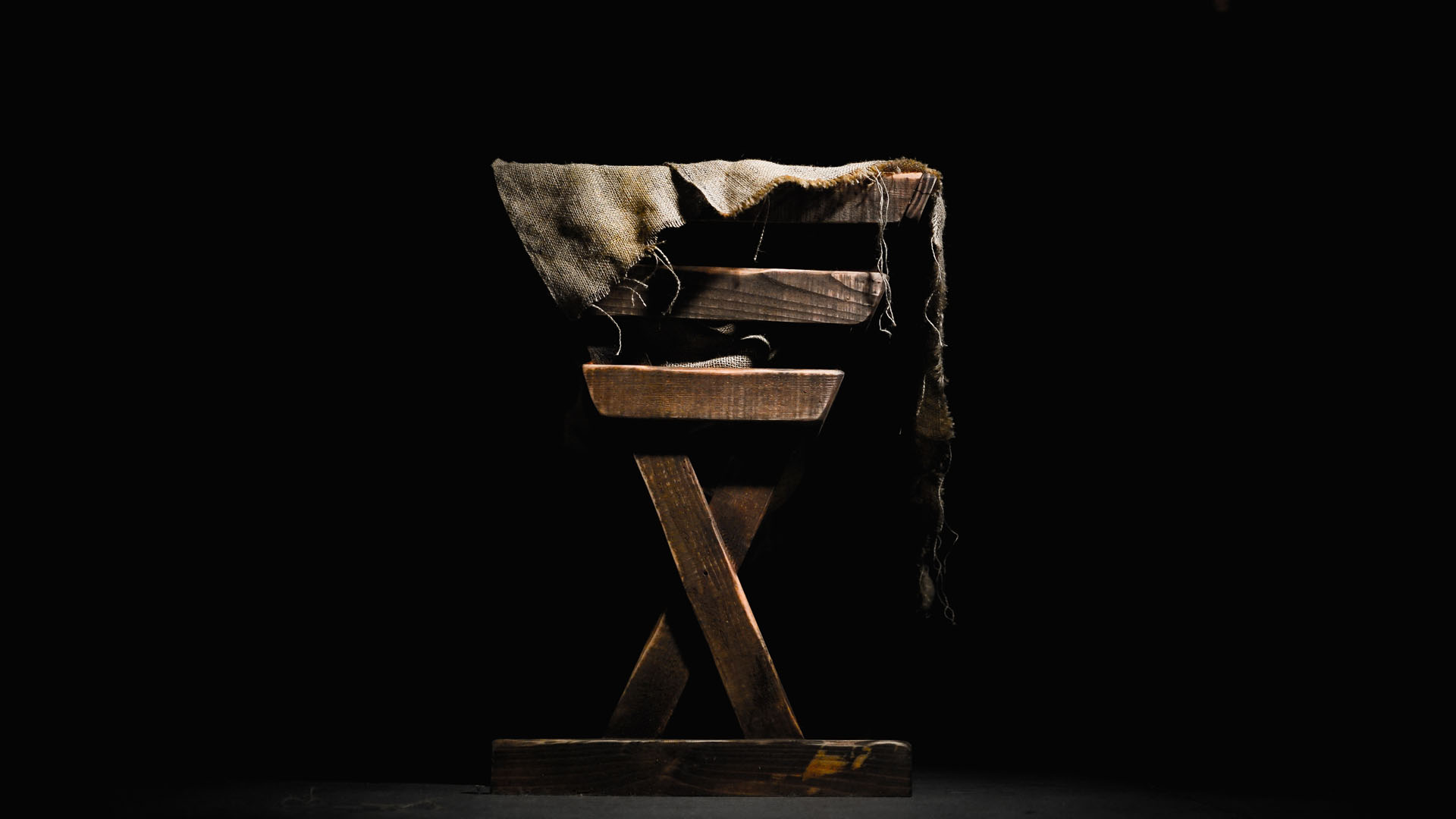
What an announcement! When the shepherds heard the angel’s report—“For unto you is born this day in the city of David a Savior, who is Christ the Lord” (Luke 2:11)—did they understand the magnitude and the mystery that Christ the Lord was born? How could they have grasped that the eternal Son of God, the second person of the Trinity, had been born as one who was like them in every respect, and one day would be their propitiation for sins (Hebrews 2:17)? As Martin Luther once put it, the helpless and nursing baby was, at the same time, holding the universe together.
As Christians, we confess that God the Son put on flesh and was born as one of us. He was hungry, tired, and bled just like us. Yet he did not cease to be the unchangeable and infinite Creator-God. This is the mystery of the Incarnation. It confounds us. But we believe in the Incarnation, not because we can make complete sense of it, but because it makes sense of everything else.
It makes sense of the Bible
The divine identity of Jesus Christ flows through the proclamations of the New Testament and the hopeful expectations of the Old like blood through veins. It is the life of the gospel—the shape of God’s saving work in Christ—that the Son of God came in the flesh (2 John 7); that while he is the eternal Creator and God (John 1:3; John 20:28; Col. 1:16-17), he also became like us (Heb. 2:17; Phil. 2:7) and reconciled us to God by his blood (Col. 1:20).
Leo the Great (400-461), who helped put together the Chalcedonian definition (451), argued that through the two natures of Christ (fully man and fully God) comes the biblical understanding of our justification and redemption. And to deny such a mystery is “to destroy all hope of man’s salvation.” The purpose of the Incarnation, Leo argues, is to deliver man from eternal death. He writes:
The Word of God . . . so bending himself to take on him our humility without the decrease in his own majesty, that remaining what he was and assuming what he was not, he might unite the true form of a slave to that form which he is equal to God the Father, and join both natures together by such a compact that the lower should not be swallowed up in its exaltation nor the higher impaired by its new associate.
He writes further that it was for the needs of our sinful case, the “inviolable nature was united with a passible nature, and true God and true man were combined to form one Lord . . . being the perfect Mediator between God and men, he could both die with the one and rise again with the other.”
Many reflections on the Incarnation end on the surprising note of God humbling himself to the form of man. But we must not stop there. While we hold up with one hand the lowly servant Jesus Christ, we must hold up with the other all his marvelously divine perfections.
It makes sense of reality
How can someone cry out, I need thee, precious Jesus, for I am full of sin, if Jesus is a mere man? Or what can he do but judge us if he is only God? The reality of our sin can only be put to right by the Incarnation. We have committed the highest offense against the highest and most worthy Being. But Jesus can both sympathize with our needs and fully atone for our sins. How?
The Son, in putting on the form of a servant, did not lose any of his glorious perfections. He is eternally great. Yet he took to himself a nature that can be stricken and bruised, that can be cursed and forsaken, and that can bleed and die. The Son did not change his divinity into humanity, nor confound the two natures into one, but united the two in one Lord and Savior.
In our family devotions and Christmas sermons, let us not move too quickly past the mystery of the Incarnation. Stay by the manger a little longer on your way to the cross. The two natures of Christ is the force behind the good news for sinners. This mystery confounds us and our listeners, but we proclaim it still!